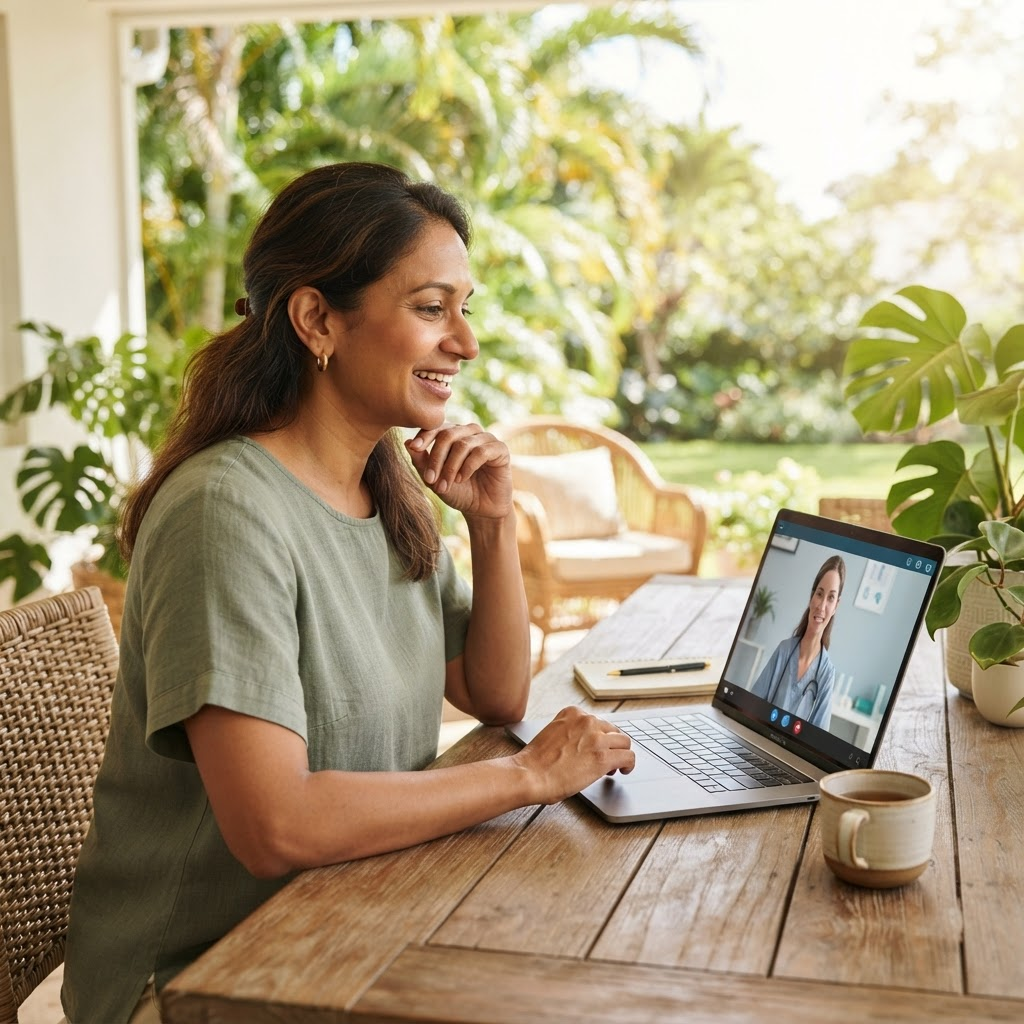
Why Telehealth is the Future of Personalized Wellness Care
Telehealth removes barriers to quality healthcare. See how virtual consultations with board-certified physicians deliver better outcomes and convenience.
When I talk to patients about why they chose telehealth for hormone and wellness care specifically, the answer is almost always some version of: "I wanted this kind of care, but getting to a specialist's office regularly wasn't realistic for my life." I think that reflects something real and important about how healthcare needs to evolve, especially for the kind of ongoing, relationship-based care that hormone and metabolic health require.
Wellness optimization — HRT, weight management, peptide therapy — isn't a single office visit and done. It's built on regular touchpoints: follow-ups, lab reviews, dose adjustments, honest conversations about what's working. That kind of care used to require repeated in-person visits, which is a real barrier for people with demanding jobs, family obligations, or who simply live somewhere without easy access to a specialist in this field.
Telehealth removes that barrier without removing the quality of care. You still get a real physician relationship — the same lab review, the same personalized plan-building, the same ongoing monitoring — just delivered in a way that fits into your actual life instead of requiring you to rearrange your life around it. For the kind of continuous, iterative care that hormone and wellness optimization requires, that accessibility isn't a convenience feature. It's what makes people actually able to stay engaged in their own care long enough to see real results.
That said, I want to be clear about what telehealth done right requires: the same rigor as in-person care. Real lab work. A genuine review of your health history. A licensed, board-certified physician making the actual clinical decisions — not a generic algorithm or a form you fill out once. The delivery method changes; the standard of care shouldn't.
This is also exactly why the ongoing relationship matters so much in a telehealth model. It's easy for virtual care to become impersonal or transactional if it's not built around real follow-up. I built this practice specifically to avoid that — every plan is monitored, every patient has a real path back to me with questions or when something needs adjusting, and lab work continues on a regular cadence just as it would in person.
Telehealth, done this way, isn't a lesser version of specialist care. It's specialist care that fits into modern life — and for wellness optimization specifically, where consistency and continuity are everything, I think it's genuinely the better model.
— Dr. Candace Chumley
Ready to make your health a priority?
Speak with Dr. Chumley about a personalized plan for your goals.
Check If You Qualify